Winter Book Releases from Asian and Asian American Authors

Curl up this winter with five new books by Asian American authors.

This article is part of Mochi’s winter 2023 issue, exploring what “environment” means to us as Asian Americans. From the environmentally friendly to your workplace, favorite neighborhood bar, or ethnic enclave — our environments are all that surrounds us, influences us and makes us who we are. Check out the rest of our issue here!
Winter is the season for curling up with a good book and getting lost in its pages. Here are some of the newest titles — spanning history to contemporary — for the long days ahead.
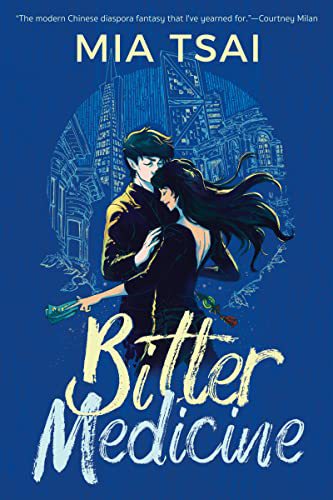
“Bitter Medicine” by Mia Tsai (Tachyon Publications: March 14, 2023)
Mia Tsai’s xianxia-inspired contemporary fantasy is a whirlwind of a debut. An action-adventure with a romance at its core between a Chinese immortal and a French elf is a story filled with a loveable, diverse cast and mystery — because what else would a family in the diaspora have but drama, estrangement, and secret longing? For Elle and the Jiangs, the list includes magical powers and attempted murder. When Elle, a divine being in hiding as a calligrapher, becomes involved with one of her clients, Luc, it is a classic transformation from friends to lovers until his job and curse interfere with her deadly family situation.
The dialogue stands out for its wit, natural quality, and intentional omissions. This adult novel is a love letter to code-switching and its many forms: exchanging phrases in multiple languages, finding loopholes, and thriving under restrictive rules, adapting to different worlds. It is its own power and talent. While readers looking for escapism will enjoy the fantasy, “Bitter Medicine” highlights the wonders of our world. Tsai’s storytelling celebrates the incessant pursuit of human connection and its fragility. There are always more places to travel to, foods to try, and experiences to enjoy with loved ones. Prepare for a renewed lust for life. — Dorilyn Toledo
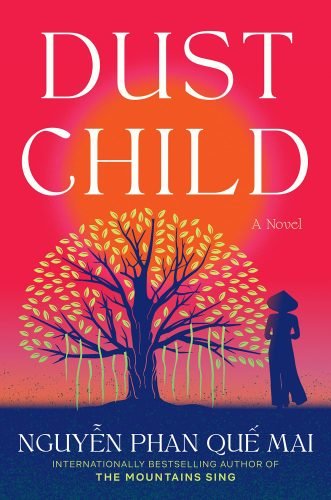
“Dust Child” by Nguyễn Phan Quế Mai (Algonquin Books: March 14, 2023)
The aftermath of the war in Vietnam is usually an afterthought, if at all considered. But when Nguyễn Phan Quế Mai learned that more American veterans were going back to the country they had fought in to search for their Amerasian offspring, she was inspired to write “Dust Child.”
Tens of thousands of children were born to American GIs and Vietnamese women, the fates of which dramatically varied from those who perished as casualties of war to those who were ostracized as children of the enemy once the U.S. left. Many were considered the “children of the dust” and lived in the streets, abandoned.
The novel jumps back and forth in time following three stories: in 1969 — two sisters working as Sài Gòn bar girls to support their parents; and in present-day — the orphan Phong, a Black Amerasian adult seeking to immigrate to the U.S. and find his parents; and white American veteran Dan who, on return to Vietnam with his wife to face the source of his PTSD, is also confronted with his own past and secrets, such as the child he left behind. While the three stories seem disparate, Dan eventually meets Phong, and all the plotlines slowly converge for a satisfying conclusion. The bestselling author of “The Mountains Sing,” Nguyễn spoke to veterans and Amerasians as research for this saga of a book that truly captures the desperation, grief, and pain of the war that continues to live on, decades after American military involvement. A great read for those unfamiliar with the conflict in Vietnam, Nguyễn’s novel provides tidbits of history and perspectives from Vietnamese survivors on both sides of the war, while also outlining a path towards forgiveness. — Giannina Ong
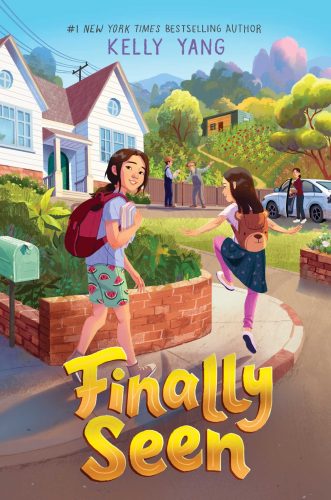
“Finally Seen” by Kelly Yang (Simon & Schuster Books for Young Readers: February 28, 2023, ages 8-12)
Once again, Kelly Yang (known for her Front Desk series) delivers a book for middle-grade readers about the cross-cultural experience of Asian immigrant families and, specifically, a pre-teen girl who simply wants to belong. In “Finally Seen,” 10-year-old Lina Gao joins her family in the U.S. after being raised by her grandmother in Beijing. But Lina quickly realizes that her family’s life is far from the quintessential American life she envisioned. Her parents are consumed with financial hardship, and they live in an apartment, at risk of eviction. Hesitant to further burden her parents, Lina quietly bears the pain of being ridiculed and ostracized at school.
Lina’s path toward belonging begins with her relationships with an English-language teacher, the school librarian, and books. It isn’t a coincidence that the librarian describes books as “sliding doors and windows,” which is Yang’s intent for many of her books. Books introduce Lina to authors with similar journeys and give her confidence as a reader, writer, and artist, empowering her to share her story where spoken words fail her.
As Yang has done with her previous works, she comfortably features characters of color and incorporates economic and social diversity without sensationalism. She writes transparently about the immigrant experience — navigating language barriers and legal rights, being underpaid and overworked, and making heartbreaking sacrifices for the sake of family — but, more importantly, emphasizes resilience and grit. With refreshing honesty, Yang normalizes conversations about racism, prejudice, and privilege through age-appropriate situations, showing readers that they are not too young to make a choice: be an ally or to perpetuate racism. And for any reader in search of a girl protagonist who courageously, even if nervously, uses her voice to stand up for herself and others, Lina Gao and “Finally Seen” will be an inspiration. — Melody Ip
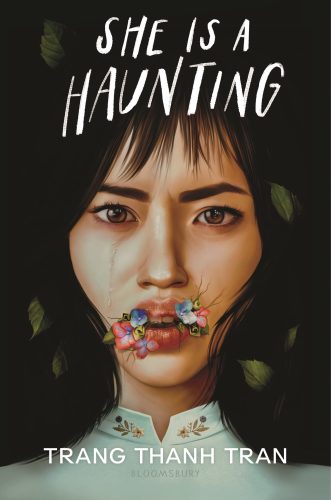
“She is a Haunting” by Trang Thanh Tran (Bloomsbury YA: February 28, 2023)
The YA horror novel “She is a Haunting” by Trang Thanh Tran follows a Vietnamese American girl named Jade who spends five weeks with her estranged father in a French colonial house they are restoring in Vietnam. If she can manage to be the perfect daughter and host for the time she’s there, she’ll be able to leave with the college money promised by her father. But the house is not cooperative. Since she got there, she has vivid nightmares that leave her in a cold sweat, finds insect parts everywhere, and sees ghosts and spirits of her ancestors, receiving warning after warning from one of them. Without her father’s support or belief, she sets about to prove that the house is, indeed, haunted, and learns some uncomfortable truths along the way. This book seemingly has it all — bisexual and Vietnamese representation, Asian American identity, imperfect family dynamics, ghosts versus colonialism, and creepy, eerie haunted-house vibes.
Though the premise is promising, and the writing is beautiful, descriptive, and so, so spooky, the plot of “She is a Haunting” is all over the place and falls completely flat. This may leave the reader feeling disconnected — and worse, apathetic — to the story.
Overall, the idea behind “She is a Haunting” is compelling, and it’s obvious the author put her culture and thoughts and vulnerabilities and heart into the novel, but there is something about the actual story and plot that is missing. — Jessica Liu
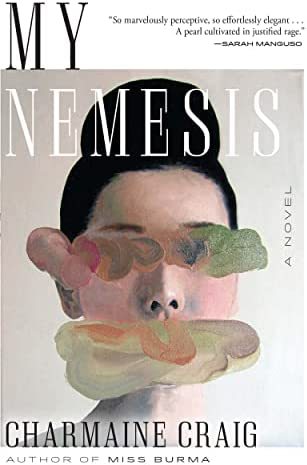
“My Nemesis” by Charmaine Craig (Grove Press: February 7, 2023)
On a rooftop bar in downtown Los Angeles, Tessa calls Wah “an insult to womankind” in front of both of their husbands. Through their mutual correspondence, Wah’s husband Charlie, an academic, becomes the object of Tessa’s yearning. Their intellectual bond builds as they discuss societal roles, existentialism, and other philosophical ideas set forth by Albert Camus and Friedrich Nietzsche. While on the topic of children, Charlie reveals he was attracted to Wah’s traditional soft femininity. Imperceptibly threatened by their differences, Tessa views Wah, an Asian author and university lecturer, as weak for her subservience and alluring beauty.
Race plays an important factor in Charmaine Craig’s latest work in contemporary adult fiction. Charlie and Wah’s recently adopted daughter from Kuala Lumpur and of Burmese descent, Htet, further challenges Tessa’s worldview on sacrifice and strength. Told from the intentionally one-sided perspective of Tessa, “My Nemesis” is a white woman’s reckoning of orientalism and co-opted mainstream feminism. A well-read memoirist — by her own admission, writing only her experiences in avoidance of appropriation — the main character is aware of her privileges and the intersectionality framework, though she is still limited by her own perceptions.
An elegant deep dive into the inner workings that demand male validation but moreso a deconstruction of internalized misogyny, Craig subverts the classical canon. The author writes with psychological prowess, casting doubt on her characters’ realities, motivations, and projections. The best literary fiction leaves the reader with their own nuanced perspective. As such, “My Nemesis” questions the ways we publicly define and privately deceive ourselves. Reminiscent of the forbidden attraction in Julia May Jones’ “Vladimir” (2022) and Ottessa Moshfegh’s insufferable narrator in “My Year of Rest and Relaxation” (2018), this novel is for readers who demand satisfaction. — D.T.