“RM x SFMOMA”: How One K-Pop Star Is Changing What Gets Seen in Western Museums

At SFMOMA, BTS leader RM’s personal art collection is on exclusive display with rarely seen SFMOMA works until Feb. 7, 2027.
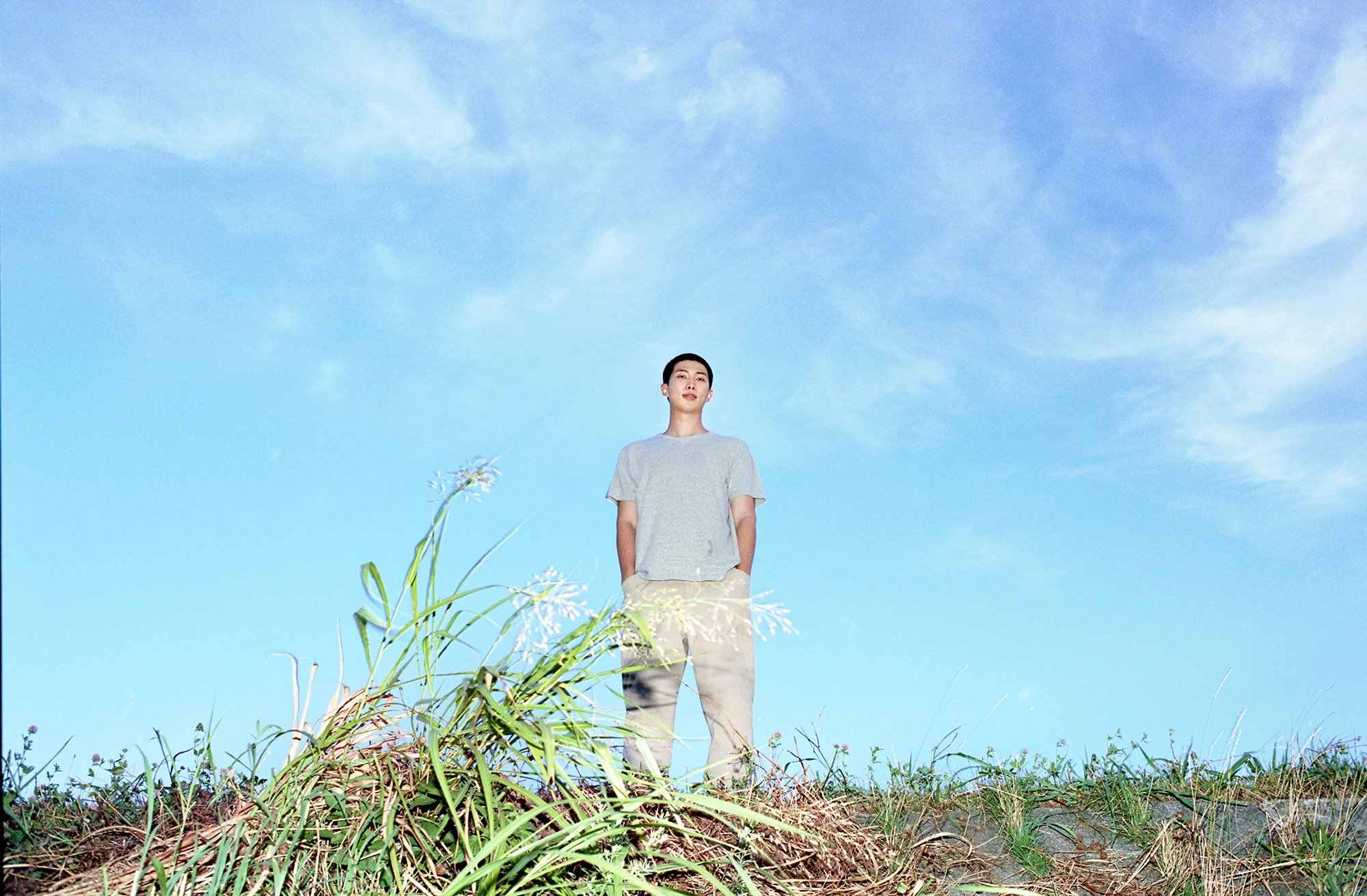
From now through February 2027, visitors to the San Francisco Museum of Modern Art (SFMOMA) will have exclusive access to see the private art collection of RM, the frontman of South Korean music group BTS.
Co-curated by RM and SFMOMA curators América Castillo and Hyoeun Kim, “RM x SFMOMA: Between You and Me” showcases 142 pieces from RM’s impressive art stash along with 36 works from the museum’s collection — some of which have rarely been publicly displayed.
The exhibit is surprisingly whimsical, reminiscent of an excited student at show and tell. While the works are surely priceless, the experience feels approachable and affectionate rather than precious and pretentious.
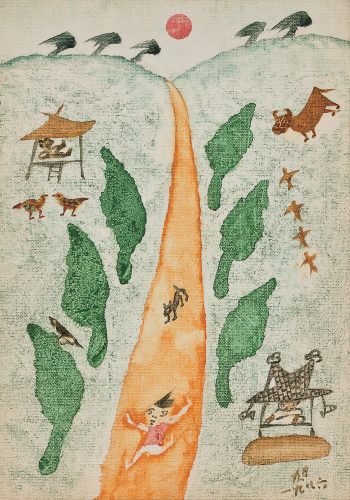
This is particularly unexpected as the show not only features well-known international artists from SFMOMA’s collection like Henri Matisse, Georgia O’Keeffe, and Mark Rothko, but also highlights many key artists of modern and contemporary Korean art from RM’s collection such as Chang Ucchin, Kwon Okyon, and Yun Hyong-keun.
At a time when art feels increasingly commodified, it is a joy and relief to encounter an exhibition built entirely around how it makes you feel rather than how important culture deems the art.
Instead, the curators invite us to entertain how art can exist in and alongside our daily life, reminding us that it was never meant to be segregated from the mundane.
How RM and SFMOMA Shaped a Collection Into an Exhibition
The project, which is organized into eight sections, was shaped by the three curators together. During the private media viewing, Kim, who is the assistant curator of painting and sculpture at SFMOMA, shared that they listened carefully to how RM “saw the works, what moved him, and how he connected them.”
It was very important to respect how RM’s personal collection took shape: a gradual accumulation over eight years, growing through “attraction, memory, and returning to certain works again and again.”
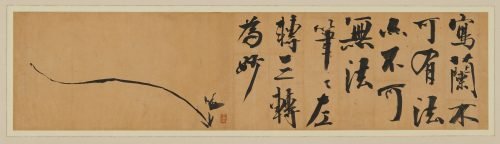
Kim told Mochi how the range of RM’s collection, spanning 1,500 years — beginning from sixth century work, continuing through the Joseon Dynasty, and including major Korean modern and contemporary art — really surprised her. “Even this calligraphy, painting, media sculpture, and then all the different types of work,” she explained. “He has media, ceramic, and jogakbo [a gift wrapping cloth made from scraps of fabric], sculpture, painting, everything, and furniture — even furniture.”
Following the throughline of interest and emotions in his collection, they ultimately decided on the following sections: “Blue Water,” “Friendscape,” “Home,” “Photo Buddh(a),” “People,” “Passion,” “I Don’t Know But I Like It,” and “Umber.”
The showcase provides bilingual wall texts and labels written by RM, and in the “Home” section, he even provides a curated playlist. His handwritten notes politely asking visitors not to touch his stuff are cheeky and warm, like delightfully scattered grace notes just waiting for us to notice them.
As an extra bonus, visitors can also choose to listen to either the English or Korean audio tours, both recorded by RM. In the English version, RM’s husky voice is friendly, self-deprecating, and full of giggles. I’m told the Korean version is different and far more intimate in tone, though no less endearing.
The Edge Effect: Turning Borders Into Bridges
Through the exhibit, RM reflects on how we live in an age defined by boundaries.
“This exhibition at SFMOMA reflects those boundaries: between East and West, Korea and America, the modern and the contemporary, the personal and the universal. I don’t want to prescribe how these works should be seen; whether out of curiosity or study, all perspectives are welcome,” he shared. “My only hope is that this exhibition can be a small but sturdy bridge for many.”
You distinctly sense how all the works resonate as if they’ve always belonged together, despite being originally separated through both space and time.
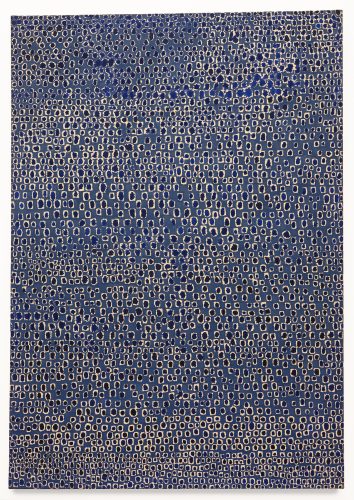
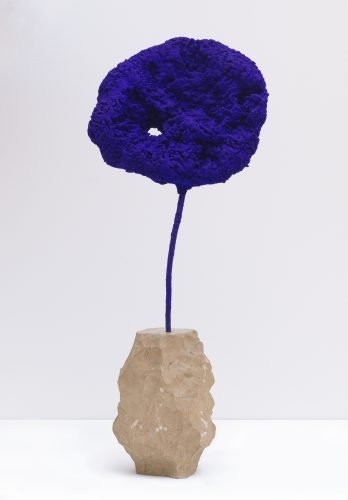
For instance, in the “Blue Water” section, the thousands of blue dots in Kim Whanki’s “26-I-70 #141” shift to the vibrant, invented blue of Yves Klein’s “Éponge (SE251),” and ends at the cheap blue dye in the plastic water bottles of Tony Feher’s “It Seemed a Beautiful Day.” Though the mood whiplashes from melancholic, lonely, and contemplative to comforting and familiar, and then back again, the conversation makes sense.
Even the floor plan and physical arrangement of each section feel boundless. The sections flow naturally from one to another, and though you can feel how you’ve moved into a different thematic space, it all still feels part of the same whole.
Another way the exhibit explores the idea of borders is how it highlights their inherently nonhierarchical nature. For example, the division between land and sea isn’t a hierarchical one; it’s just a distinction between two kinds of physical geography.
“In ecology, it’s often called the edge effect: the idea that when two different habitats touch, like a forest encountering a meadow, for example,” SFMOMA curatorial project manager Castillo shared at the press conference. “The boundary between them is often where the most abundance of plant and animal life occurs. Nature already wisely showed us that the space between things isn’t necessarily empty. Sometimes it’s where the most life is.”
Juxtaposing High Art With the Everyday
In contrast, one of the criticisms of the art world is how it can be very hierarchical. There is a vertical sense of high art and low art that corresponds accordingly to high and low monetary value.
Not to mention, it’s often associated with both academic and classist snobbery. As a result, art — especially the kind shown in museums and galleries — can feel out of reach, out of touch, and out of step with “regular” people.
“Inevitably, the ideas that a museum shares are shaped by the people who are welcomed inside its walls. The art world cannot fully reflect the world around it if it remains separate from it,” Castillo said. “Art can sometimes feel intimidating, especially for those who haven’t felt like they belong in this world. It’s as if they felt like understanding must come before feeling, but that doesn’t have to be the case.”
In this manner, “RM x SFMOMA” succeeds.
The exhibit feels incredibly accessible, like you’re visiting a close friend with exceptional taste (and a lot of money). The concept of “between you and me” is horizontal, as if the theme of the collection is centered upon, “I like this. I want to show people this thing.”
It is no surprise, then, to discover Castillo is the genesis of this exhibition. She reached out first to RM two years ago when he was serving his mandatory military enlistment.
“The space between two things does not have to be a compromise between them,” continued Castillo. “It can become a place of its own. True richness can exist somewhere in that in-between space between one world and another, between one person and another, or as the title of this exhibition suggests, between you and me.”
The installation also juxtaposes pieces made solely for admiration — purely for their existence as art — and everyday items, which exist primarily for functionality and secondarily for aesthetics.
Due to this contrast, Kim discovered an unexpectedly strong visual connection between the jogakbo, the Piet Mondrian (“Church Visage 5”), and the Paul Klee (“Untitled”).
“We use [the jogakbo] for wrapping, covering the table, just everyday use. We don’t even know the artist. It’s not an artwork. It’s maybe some female from [the] Joseon Dynasty [and] they made it for themselves for their daily life,” she explained. “And then I pair [them] with Mondrian and Paul Klee. Oh my god, such a great abstract art together.”
The co-curator went on to provide more context, by describing how the jogakbo was made with scrap fabrics in order not to waste materials during a time in Korea when resources were scarce.
“But now it’s really like an abstract, and then you can see the pattern, and then you can see all the different beauty of that era,” Kim enthused to Mochi. “Then once I pair two works, I can feel like, oh my god, this [is] like 100 years apart. This is from abstract art. This is from daily use, but it’s really like I can feel a very strong connection. That [was a] very unexpected relationship and connection between two works from [RM’s] collection.”
Castillo described this same feeling in the press release: “These artists remind us that art was never separate from everyday life to begin with. It’s found in the places we return to, the people we care about, and the questions that stay with us.”
The Korean Women Artists “RM x SFMOMA” Wants You to Remember
“RM x SFMOMA” raises these questions, not only allowing us to interrogate our own preconceptions regarding what is worthy of the label “art,” but also, who can make that art.
For Kim, she really wanted to highlight the works of the female artists in the “Passion” section, such as fiber artist Lee ShinJa, visual artist Suki Seokyeong Kang, abstract expressionist painter Choi Wook-kyung, and painter Rhee Seundja.
Though they’re great artists in their own right, they’re lesser known compared to other Korean artists.
“We really want people to remember their lives,” she shared. “They lived through all the difficult times: during the war, dictatorship, and Japanese colonial rule, but they never gave up. They [kept] creating and painting, even [when] at that time … it was really hard to become an artist [as a woman] because always marriage and families has to be first, and then ours has to be second.”
As for RM, he believes in this age of rampant consumption, the attitudes of past artists can resonate even moreso today.
“As a young man from Korea, I’ve collected with the hope that I could add a slightly newer, younger, maybe better perspective and sensibility, and eventually that led me to this exhibition. From selecting the works, placing, and even framing, I tried to bring together everything I had liked and everything I had wished could have been better. I tried. I just tried to make this exhibition as interesting and as new as I possibly could. I hope you could feel it.”
The San Francisco Museum of Modern Art (SFMOMA) will exhibit “RM x SFMOMA: Between You and Me” from Oct. 3, 2026, through Feb. 7, 2027. The SFMOMA installation marks its only U.S. presentation.