Finding “South by South Asian” Representation at SXSW

SXSW may be over this year, but South Asian representation in film isn’t. Read on for takes by South Asian filmmakers like Dev Patel and Lilly Singh.
SXSW may be over for the year, but South Asian storytelling isn’t. Just last year, South Asian House made its first appearance at the event as a space for attendees to “celebrate [South Asian] stories and perspectives and invest in opportunities for collaboration and connection.” Back in 2023, there was only one South Asian feature film at the festival. But this year, during the nine days of film screenings, at least seven films I saw had people of South Asian heritage at the helm, whether in lead roles, or as writers, producers, and directors behind the scenes.
More Representation, More Variety
One of the history-making projects at the festival was a film called “Ben and Suzanne: A Reunion in 4 Parts.” Its theatrical debut marked the first time a narrative feature by a Sri Lankan director premiered in the United States. For director Shaun Seneviratne, seeing South Asian representation at a film festival like SXSW meant opening the door for more variety within a group of people that covers a vast geography.

“When we were only getting two or three [South Asian-led] films a year, to be honest, I didn’t identify with it because a lot of those stories have a mainstream sensibility that feels rote … [like we’re] doing the Indian or South Asian version of other stories that we’ve seen a billion times,” he shared on Zoom. “Now we don’t have to feel like we’re standing in to speak for the entire group. We can make a movie that feels like it’s personal and specific to South Asian-ness of identity in a little bit of a different way.”
Seneviratne explained that adding more South Asian voices to the mix allows more freedom to pursue other types of stories. Actor Sathya Sridharan, who is Indian American and played one of the titular characters Ben, agreed. “We’re getting to see [that] the aperture is expanding — what does it mean to be brown in this country, or just what it means to be an American, or what are these different human possibilities that we don’t necessarily have to say, ‘that’s an identity story,’ or ‘that’s the only South Asian experience’?” It allows for storytellers to dive deeper into complexities on screen.
The day after the premiere of her first feature film, “We Strangers,” Indian American director Anu Valia and I talked about how true diversity allows for better art. Every artist is influenced by different things, so you get better, more authentic art. “You get more interesting stories when you have people from varying backgrounds not just sharing their own personal story, but their own personal art,” she told me. “[The art has] always existed, [but] you want the art to be on a bigger platform at a place like SXSW.”

Valia recalled moments where she was considered the “diverse person” in the room. But how can one person be diverse? “I cannot be diverse and [represent] all Indians. That’s actually not diverse either,” she concluded.
In a panel on “Manifesting South Asian Stories” at Canada House, Lilly Singh echoed similar thoughts. Her first feature film “Doin’ It,” which she wrote, produced, and starred in, was set to debut the next day at the film festival. “True representation means that things on both ends of the spectrum should exist,” Singh expressed. While you can have media that leans into South Asian history and identity, shows like “Never Have I Ever” (which made its own cameo in the film) can show a flawed South Asian character, but her South Asian identity doesn’t have to be the main focus.
“Sometimes we have this idea that one show should satisfy all of our needs,” Singh said. “[But] what I want to see more of is literally everything because the reality is — sure, we have some similarities, but we [also have] different experiences. Your parents are not the same as mine. My love life is not the same as yours.”

Tenacious Storytelling
Getting a movie from conception to a film festival like SXSW takes a long time; each project is a true labor of love from everyone who touches and believes in it, whether a producer, financier, cast or crew member, scriptwriter, or director.
The process of getting “Ben and Suzanne” made took Seneviratne and his collaborators a decade — and a lot of independent financing from family and friends, including high school choir teachers, random producers, and the director’s life savings. “In an industry that’s always telling you, you have to wait for someone else to say yes … in many ways, Shaun and this film is a testament of saying, we don’t really have to wait for gatekeepers,” said Doron JéPaul Mitchell, who served as a producer on the film. For him, the project felt like another revelation of what this industry could move toward — at its core, “great content, great stories, and a lot of people working together to get it out there.”
Similarly, it took Valia 10 years to get from concept to the final version of “We Strangers.” “I’m a different person now than I was in every draft,” she reflected. “[But] that’s the joy of what you get to do. You get to change with your art and then your art can reflect that change.” Valia saw her movie as ever-changing. Even throughout the process of filming, she still found places to continue exploring. This helped her evolve the story even further, and through play and discovery, she was able to become even more specific and intentional in her work.

Though “Doin’ It” took less time to come to fruition, Singh also attested to how time-consuming the movie-making process can be. The project first started in 2019, but it took input from the original writer Neel Patel, director Sara Zandieh, and Singh — about 25 drafts — to get the film made.
While the experience brought a lot of firsts for Singh, “The number one thing I learned was just how freaking hard this is,” she admitted. “It is difficult for the reasons you think it will be difficult, and then there’s 7 million more reasons that you’ve never anticipated that make it just that much more difficult.” But, she reiterated, “We have to believe in the mission of South Asian storytelling so immensely and passionately in order to get it done because the obstacles are immense [so] our passion has to be more immense than the obstacles we face.”
Dev Patel’s “Monkey Man” celebrated its theatrical release earlier in April after having its world premiere as a headliner at SXSW. But that, too, was a long time coming and another decade-long journey. In fact, the movie went through many trials and tribulations before Patel got his “Pretty Woman” moment thanks to Jordan Peele’s Monkeypaw Productions. From the very beginning, Patel understood the story he wanted to tell, but mentioned that he reluctantly fell into writing the script, and was then nudged into the director’s seat, despite pitching the film to others he knew. While people liked the story, many thought that Patel was its biggest champion — the one person who could truly do it justice.

In the way the writer-director-star hybrid talks about the film, you can tell that he’s passionate about it — it’s his baby, after all. Look up any interview from the movie’s marketing campaign and you’ll hear wild stories about how the film was set for a streaming release before being dropped; how Patel fought through a broken hand and foot and an eye infection to complete the shoot; and how the cast and crew worked through budget constraints and a global pandemic to bring the movie to life. Everything that could go wrong went wrong, and it seems like a miracle that the final product came together. But the challenges were worth it: The film went on to win the coveted Audience Award at SXSW.
Sharing Universal Stories 🤝 Breaking the Mold
Filmmakers know that their work isn’t going to resonate with everyone. “It’s not about walking into a room and having everyone like you,” Valia shared. The way she approaches filmmaking is more about finding the people who will truly understand her. “It’s about, like, ‘Do I have any friends? Is there a way I can make some friends?’”
Even with a big blockbuster like “Monkey Man,” Patel acknowledged that he wanted to carve his “own little thing.” Many have likened the movie to other popular action franchises, like “John Wick” or even “James Bond,” which some may consider a high compliment. But Patel wanted to move away from those comparisons. In the SXSW Studio, he explained, “We [as South Asians] have so much [and] you don’t need to fit in the box of being a Bond … This was my take at it … I think being locked into those sort of franchises, too — you’re servicing a huge machine.”
During another Q&A session on the making of “Monkey Man,” Patel paused the moderator. “I was just thinking about it, when I was a kid, I used to run away from my culture in school,” he interjected animatedly. “It wasn’t cool to be associated with India. And sometimes to break the mold, you have to enter it. I’ve been constantly pigeonholed as the Indian IT guy or this or that. And I’m, like, no, I’m gonna double down — I’m gonna triple down on the culture. It’s vibrant and it can be cool.”

If a film wasn’t made for everyone, or highlights a specific story, that doesn’t mean that it can’t still transcend audiences. “Ben and Suzanne” was based on a real-life relationship from Seneviratne’s own life, but at its heart, the movie is funny and real. Perhaps Mitchell, who is a Black American, described it best: “It reminds us that a love story is universal. People can be people.” He went on, “When you continue to expand the horizons of the individuals that are creating these stories, you almost challenge your audience to let go of needing that to justify why [they sought out this particular story]. That gets to actually be the icing on the cake and not just the cake.”
At Canada House, Anita Verma-Lallian, a producer on “Doin’ It,” pointed out, “The notion that South Asian stories are only for South Asian audiences or are niche, that’s antiquated. I think now people are realizing that our stories have broader, more commercial appeal and I think that trend is going to continue.”
Singh, her co-producer, concurred. Their film tells a human story that anyone can watch and still understand and relate to, even if they’re not South Asian. “If there was a story about South Asians where it literally just was about a human story and had nothing to do with them being South Asian, or if there was a story about them being very South Asian, I still think both are for everyone,” Singh added. “I grew up watching ‘Fresh Prince,’ I wasn’t confused. I grew up watching ‘Friends’ and ‘Seinfeld,’ I wasn’t confused. I really do think it’s an excuse now … We can understand humans.”
For many South Asian filmmakers at SXSW, the inclusion of more South Asian representation marked a pivotal moment — one that all hoped will open the door for more repeat opportunities. “It’s just a wonderful place to exist in this industry right now, where we get to go and put our stories, our history, our ancestry [into these films],” Patel gushed. “[‘Monkey Man’] is my humble addition to the genre. I hope … it opens the door and it allows a lot of other cultures to come in and put their spin on that and do things.”
Even Singh, who put a lot of effort into her project admitted she doesn’t view money as the main marker of success. “Making money would be great,” she added as a caveat. “[But] I want [this movie] to be successful enough for me to keep making things like that. My only goal is to keep making stories about underrepresented communities.” Moderator Gitesh Pandya of Box Office Guru added, “Hollywood is a place where people are allowed to fail … Everyone should be allowed to make different kinds of films regardless of which kind of success it might be to have another one … Every project really opens the door to so many other people involved.” That leads you to have a variety of films that people enjoy and find meaningful in their own way.
As I wrapped up the interview with the cast and crew of “Ben and Suzanne,” Sridharan joked, “They’re calling it South by South Asian, guys. Did you know that?” If that’s so, it’s exciting to think about — and hopefully see — what else will come out of SXSW and other film festivals in the future.
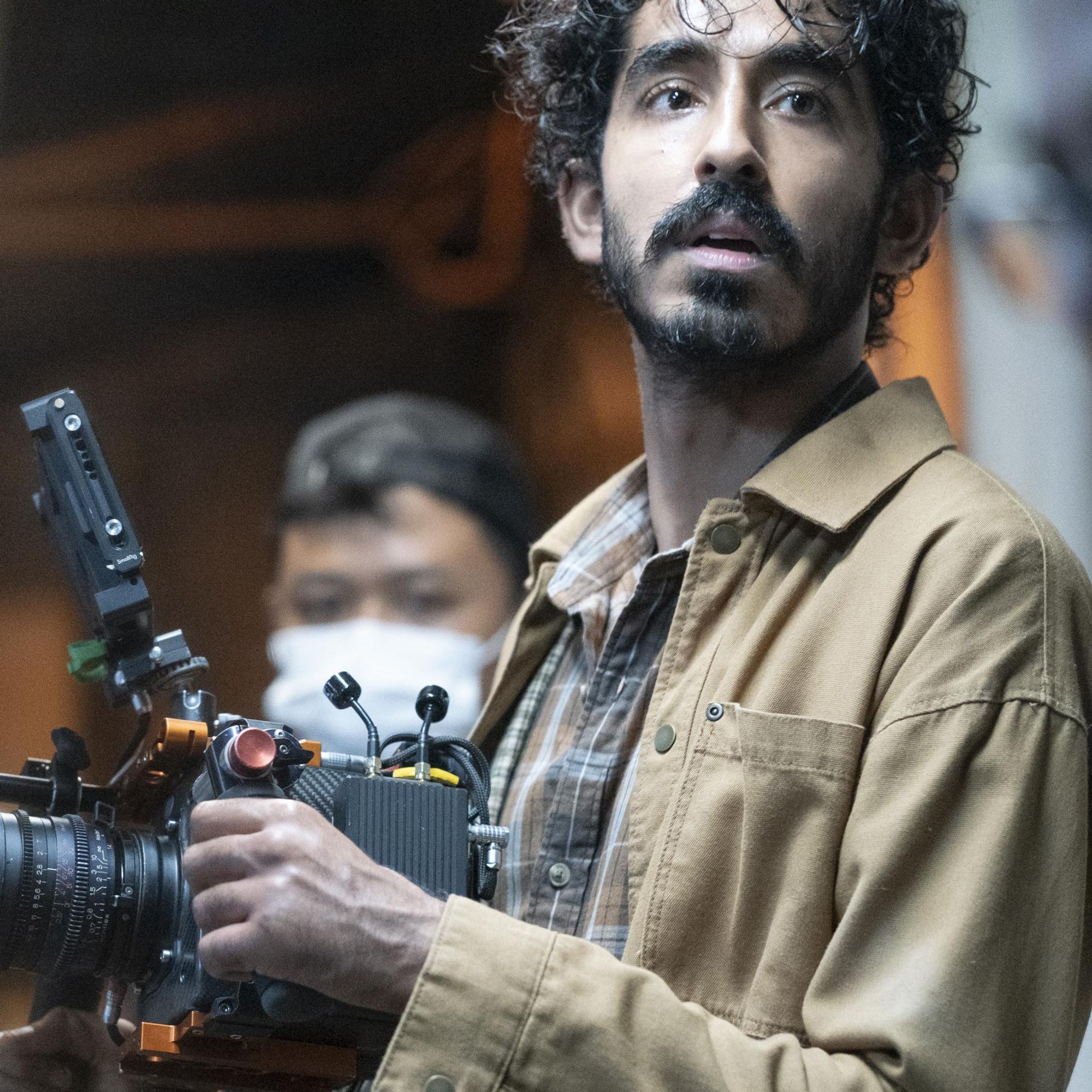
Cover: Dev Patel, director of “Monkey Man” courtesy of SXSW